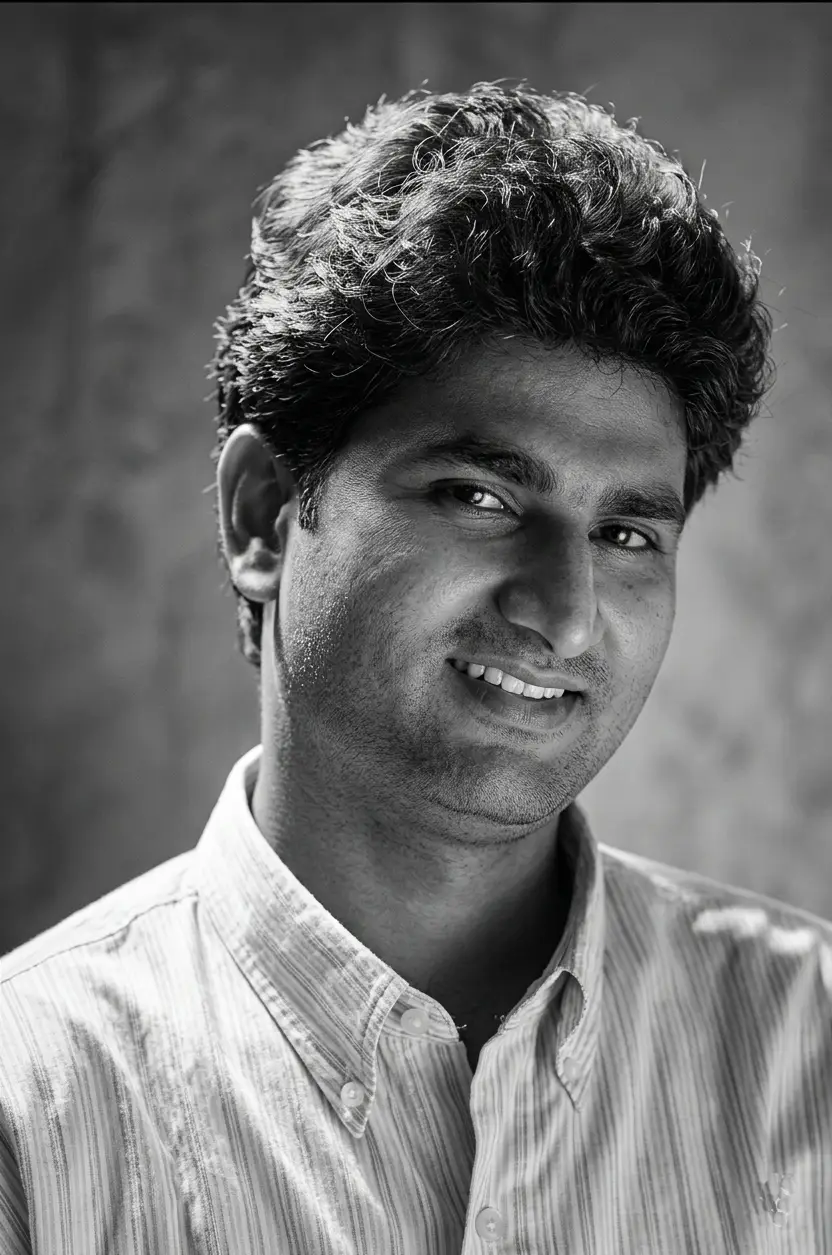
Datta Bansode is a deeply thoughtful contemporary Indian artist whose work is a powerful blend of personal memory, social awareness, and ancient philosophy. Born in Latur, his artistic journey began under the guidance of a Buddhist monk, Jagtap Sur, who taught him the fundamentals of drawing. While his early years at the J.J. School of Art in Mumbai were marked by bright, experimental scenes of daily life, two major events eventually redefined his creative voice.
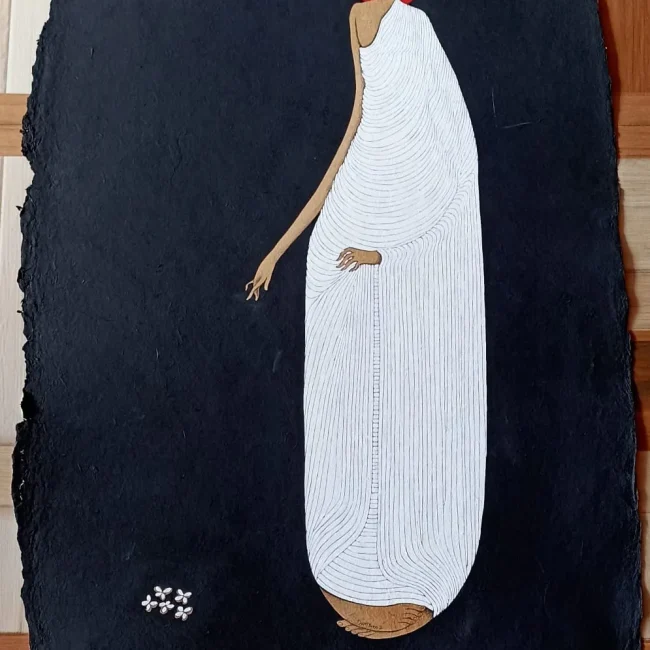
The first turning point occurred in 1992 following the devastating Latur earthquake. Witnessing the profound grief of women who had lost everything, Bansode abandoned his vivid palette for somber tones of charcoal, beige, and chalk-white. This experience led him to simplify his figures, focusing on the raw emotion of mourning rather than decorative detail.
The second shift happened in 1998, sparked by the irony of India’s nuclear tests, which were coded as "Buddha’s Smile." Troubled by the use of a symbol of peace to describe a weapon of war, Bansode began his celebrated Lord Buddha series. These works serve as a reminder of the forgotten philosophy of non-violence. He draws heavy inspiration from the classical sculptures of Mathura and Gandhara, as well as the frescoes of Ajanta and Ellora, to create timeless, neutral-toned compositions.
Influenced by masters like Tyeb Mehta, Bansode’s art is a "social documentary" that bridges the gap between India's rich historical traditions and its complex modern reality. For Bansode, a painting is a continuous journey of search and release.